*This post may contain affiliate links for which I earn commissions.*
There are days when even gentle self-care feels like too much.
Not because you don’t want support, but because even helpful things can start to feel like effort.
You might want something grounding, but not a new project. Not a big emotional unpacking. Not something that quietly turns into another thing to “do well.”
You just want a small doorway back to yourself.
That’s exactly where quiet art prompts can help.
Not art as performance or as productivity. Not art as a test of whether you’re “creative enough.” Just a simple, repeatable way to use line, shape, and a bit of choice to come back to your senses.
And when you’re tired, that matters.
In this post, you’ll see how a printable set of line-based and collage-friendly prompts can become a calm, reliable tool. You’ll also find a minimal supply list, a few low-energy ways to use them, and some beginner-friendly resources if you want more structure without it turning into homework.
Why Quiet Prompts Work When Words Feel Too Big
Sometimes words are the problem.
Not because they’re bad, just because they can feel too loaded, too effortful, or too far away.
That’s where simple creative prompts can be surprisingly useful.
When everything feels like a lot, it helps to come back to what’s already with you: breath, sensation, attention, choice.
Art prompts make that easier because they ask for small, concrete actions.
Draw one line.
Fill one shape.
Choose one image.
Tear one piece of paper.
That’s manageable.
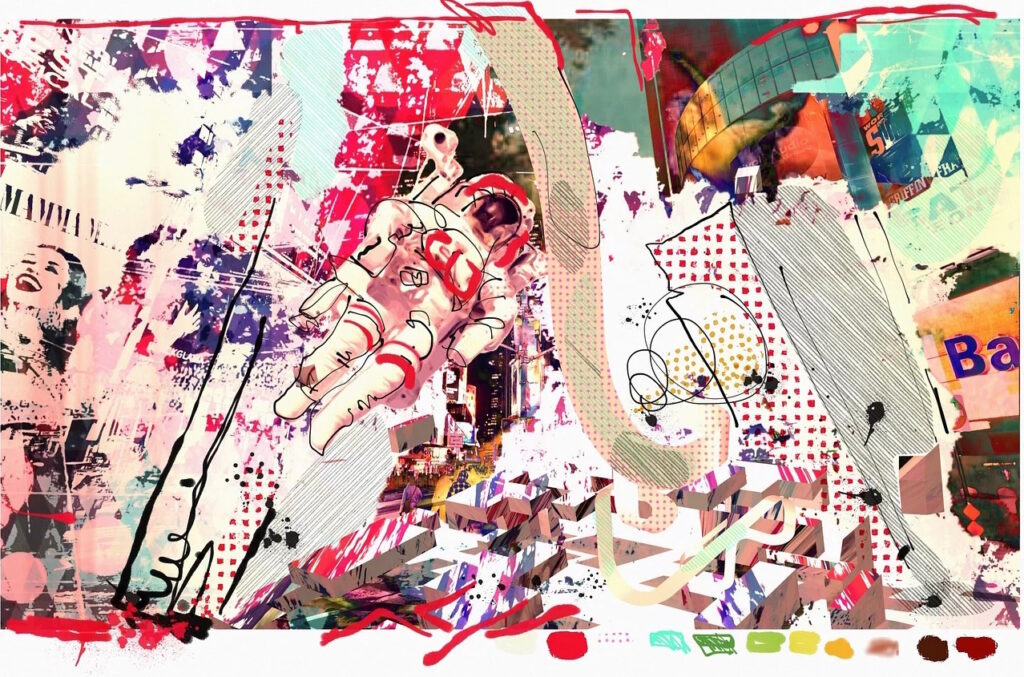
You don’t need to process your whole inner world to begin. You don’t need a breakthrough. You just need somewhere to start with your hands.
Line-based prompts are especially supportive because they’re simple and low-pressure. A line can be slow or quick, steady or shaky, light or heavy, straight or looping. You don’t need to analyse any of that. Just noticing it is enough.
Collage adds another kind of relief: you don’t have to make everything from scratch.
And when you’re tired, that can be the difference between doing something and doing nothing.
You choose. You arrange. You stick things down. That still counts as creativity. It still says something. It still helps you reconnect with your inner world without demanding too much from you.
If you use creativity as part of mindfulness or spiritual practice, this can also become a grounded kind of intention work. Not the dramatic “manifest it now” version. More the quiet version: noticing what you want more of, and giving it a little space.
Nothing forced, simply invited.
What This Printable Pack Is Designed To Do
This kind of prompt pack isn’t really here to teach you how to make “good art.”
It’s here to make starting easier.
Think of it less like a lesson and more like a set of small openings. Each page gives you a place to begin, then gets out of the way.
Line-based prompts work well when you want repetition and simplicity:
- Draw one continuous line without lifting your pen
- Make a border of slow marks, then fill the centre with lighter ones
- Repeat a single shape until it feels settled
- Draw three lines that match your current energy, then three that soften it
Collage-friendly prompts are useful when you want colour, texture, or symbolism without pressure:
- Choose two images: one that feels like “today” and one that feels like “support”
- Build a small shelter shape, then add one comforting detail
- Layer scraps from light to dark (or the reverse)
- Make a page using only round shapes and notice how it feels
The prompt itself isn’t really the point.
What matters is what it opens up: a few minutes of attention that feels steady, kind, and real.
If you like working with symbols, prompts can also become a quiet way to hold intention. A circle might mean wholeness or protection, a line might suggest direction or boundary. A collage piece might represent something you’re inviting in.
It doesn’t need to be deep, nor does it need to be impressive.
It just needs to feel true.
Simple Supply List For Calm, Not Performance
This works best when the barrier to entry is low.
So the supply list should be too.
You do not need a full art setup for this. The less complicated it is, the more likely you are to actually use it.
Essentials
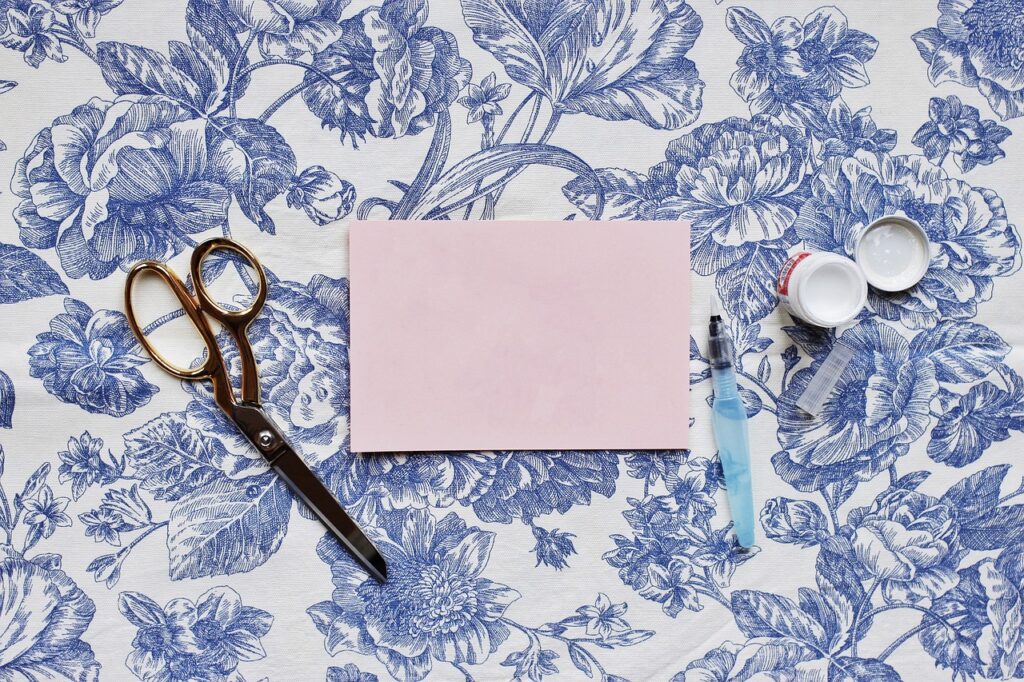
- A pen you like using: fineliner, gel pen, ballpoint, or felt tip
- Paper: printer paper is fine; thicker paper helps with collage
- Something to stick collage down: a glue stick is easiest
- Scissors (optional): tearing by hand works just as well
Helpful Extras
- A second pen or marker in another colour (for contrast)
- A simple pencil (for softer lines)
- Old magazines, packaging, or scrap paper
- Washi tape (optional, and very forgiving)
If You Are Very Tired
If your energy is low, strip it right back:
- One pen
- One prompt page
- One small piece of paper (even a sticky note)
That’s enough.
Genuinely.
If you enjoy materials, you can absolutely bring in nicer paper, coloured pencils, or a small mixed media pad. Just keep the baseline simple enough that this still feels accessible on low-energy days.
Beginner-friendly resources that pair well with this approach include basic line drawing guides, simple collage books, or short mark-making lessons. Even a small printable mini-course can help if it gives you a few marks you can return to without overthinking it.
The goal is always the same: less pressure, more access.
How To Use This When You’re Tired
This is where the practice becomes actually useful.
Because tired creativity needs different rules.
A lot of the usual advice sounds great in theory, but not always in practice. “Set an intention.” “Create a ritual.” “Make space.”
Sometimes that’s helpful, but on occasion it’s just another layer.
When your energy is low, it helps to make the practice smaller and simpler.
A Three-Minute Version
If all you can manage is a few minutes, try this:
- Put the prompt page in front of you
- Read it once
- Make one mark
- Make three more marks like it
- Stop whenever you want
That counts.
That is a complete practice.
Stopping isn’t failing. It’s finishing.
The “No Decisions” Method
If deciding feels like the hardest part, remove as much of it as possible:
- Use the same pen every time
- Use the same paper
- Keep a small envelope of collage scraps ready
- Work through prompts in order
This is just gentle structure.
And often, structure is what makes the practice actually happen.
The “Soft Landing” Setup
If you have a bit more energy one day, make things easier for future you:
- Print the pack and keep it in one place
- Clip a page to a board or keep it on a clipboard
- Leave a pen and glue stick nearby
The idea is simple: starting should feel like one step, not five.
That makes a bigger difference than people think.
When You Cannot Finish
And if you begin and then stop, you can leave the page exactly as it is.
It still counts.
An unfinished page can still hold something honest.
If you want a sense of closure, add a small ending mark, such as a dot in the corner or a simple closed shape like a circle. That’s often enough for your nervous system to register: “done”.
Practical Application Or Creative Exercise
If you want to try this in a way that feels easy and contained, start here.
The Quiet Sigil Page
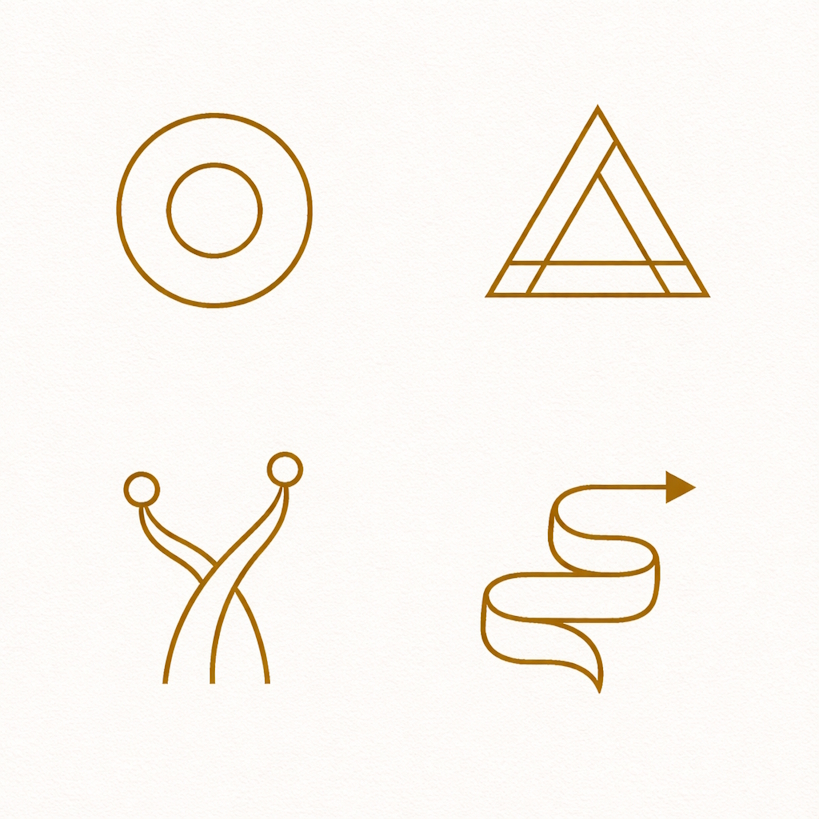
This is a simple five-minute practice you can try with almost any prompt.
And no, it doesn’t require formal symbolism knowledge or “doing it right.”
It’s just a way to make a small page that holds a simple intention.
- Choose a feeling you want more of
(steadiness, clarity, patience, rest, belonging) - Write one simple sentence
- “I make space for steadiness.”
- “I return to my centre.”
Keep it plain and believable.
- Pick one prompt and follow it slowly for two minutes
- Add one small symbol that matches your feeling
- A circle for steadiness
- A spiral for returning
- A square for support
- Three dots for “enough”
- Name the page
Something simple like “Steady” or “Soft Return.” Then stop.
That’s enough.
Optional: place the page somewhere you’ll see it once today. Not as a reminder to fix yourself, simply as a quiet point of contact.
If you like structure, a printable prompt pack helps because it removes the need to decide where to start. A simple folder or journal for finished pages can also become unexpectedly grounding over time.
Making Space For Small Creative Truths
Quiet art prompts don’t ask you to become someone else.
They just give you a way to be where you are, with something simple and tangible in front of you.
And sometimes, that is more helpful than words.
A few lines on paper can hold more honesty than a perfectly phrased affirmation, especially on the days when language feels far away.
If you use creativity as part of mindfulness or spiritual practice, think of this as a steady, low-key tool.
Not a shortcut.
Not a performance.
Not another thing to get right.
Just a way to return, notice, and begin again.