
*This post may contain affiliate links for which I earn commissions.*
Some spiritual practices begin with candles, crystals, or beautifully arranged altars. Others can begin with whatever is already sitting on the kitchen counter, when life feels a little too hectic.
If you’ve been curious about ritual but not drawn to anything overly mystical, everyday objects can be a simpler place to begin. A mirror, a bowl, a piece of thread, a bell, a small stone perhaps. Ordinary things you already live with can become small, steady anchors when your mind is busy, your energy is low, or your days feel shapeless.
You do not need a perfect altar or a dramatic practice to make something meaningful. Sometimes what helps most is choosing one object, giving it a simple role, and letting it quietly remind you about what matters.
In this guide, you’ll learn how to assign grounded meanings to everyday objects and use them in simple rituals that actually fit real life. Think of it as symbolic housekeeping: a practical way to bring mindfulness and manifestation into your day through small, repeatable acts that feel emotionally honest.
Why Everyday Objects Can Feel So Powerful
Objects work well as spiritual tools because they ask very little of you. You can see them, touch them, hear them. They give your attention somewhere to land.
A meaningful object isn’t powerful because of what it’s made of. It becomes meaningful because of what it helps you remember.
When you give an object a role, you create a cue for your mind and nervous system. Over time, that cue can become familiar and reassuring, like a small bell that tells your body, “We’re starting now,” or a bowl that quietly says, “This can be held.”
If you want to choose a symbolic meaning that actually sticks, it helps to think in three layers:
- Function: What does this object do in everyday life?
- Feeling: What emotion or atmosphere does it naturally bring up for you?
- Focus: What inner quality do you want it to support – clarity, patience, openness, protection?
If the meaning feels forced, it probably won’t stay with you. If it feels obvious, it usually will.
1. The Mirror: For Clarity, Self-Witnessing, And Honest Reflection
Mirrors can be surprisingly grounding spiritual tools, especially if you’ve been feeling disconnected from yourself. They don’t ask you to become more polished or “better.” They just reflect what’s already there.
Symbolic meaning: truth, clarity, self-recognition, honest reflection.
A mirror practice doesn’t need to involve intense affirmations or anything performative. Sometimes it’s enough to stand still, meet your own eyes, and stay there for a few breaths. That kind of simple approach can be more powerful than it sounds.
Simple ritual ideas
- Morning clarity check: Stand in front of a mirror and take three slow breaths. Ask: What actually matters today? Name one priority (not ten, just one).
- Release what is not yours: If you’ve been carrying someone else’s stress, mood, or expectations, look into the mirror and calmly say: I return what is not mine to carry.
- Mirror boundary cue: Place a small mirror near your workspace. Each time you catch your reflection, let it remind you to come back to your own pace.
Reflective prompts

- What am I avoiding seeing right now?
- When my mind feels scattered, what kind of clarity would actually help?
- What would it look like to be on my own side this week?
If you like journalling, pair this practice with a notebook and title one page: What I’m Ready To See.
2. The Bowl: For Receiving, Holding, And Making Space
A bowl is a deeply practical symbol because it has one clear purpose: it holds. That makes it especially useful for the parts of life that feel messy, tender, or unfinished.
Symbolic meaning: receptivity, nourishment, containment, support.
Bowls can also be useful for manifestation in a grounded way. Not as wishful thinking, but as a quiet practice of making room for what you want more of.
Simple ritual ideas
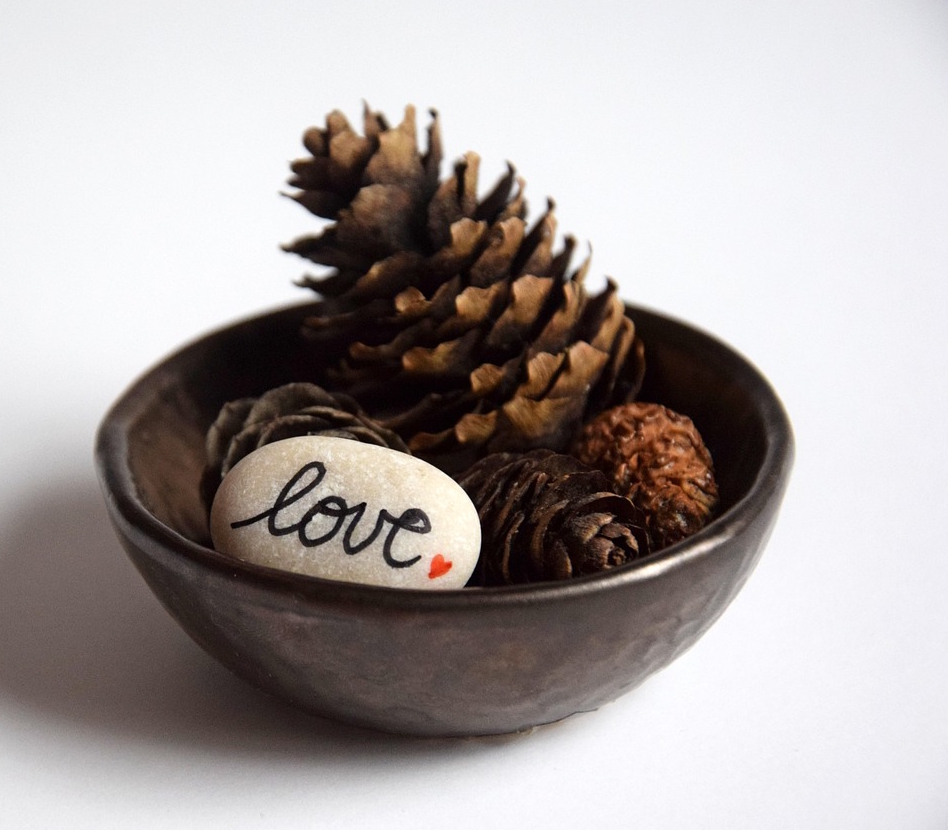
- The receiving bowl: Choose a small bowl and place it somewhere visible. Add a slip of paper with one clear intention written in plain, present-tense language (for example: “I am building steadier routines”).
- Worry bowl: Write your worries on small scraps of paper and place them inside. This isn’t avoidance, it’s containment. You’re reminding your mind: This matters, but it doesn’t need to take over everything.
- Gratitude stones: Put a few small stones in a bowl. Each time something good happens, move one from one side to the other. The point is the gesture, not the scorekeeping.
Reflective prompts
- What am I ready to receive if I stop being so tense all the time?
- What could be handled with care rather than being solved immediately?
- What would truly make you feel good this month?
A ceramic bowl, a wooden dish, or even a clean jar can work. The material matters far less than the consistency of using it.
3. Thread And Cloth: For Connection, Repair, And Quiet Devotion
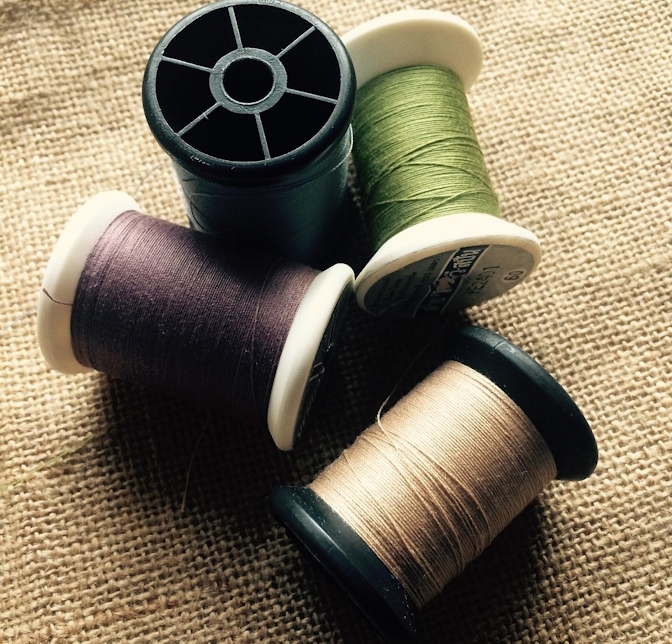
Thread is humble, but it carries with it a powerful metaphor of connection. Cloth brings softness and care, which can be especially grounding if your mind tends to outrun the rest of you.
Symbolic meaning: continuity, relationship, repair, devotion, weaving a life.
Thread and cloth are especially helpful for creative spirituality because they let you do something with your hands. And sometimes that’s exactly what helps you come back to yourself.
Simple ritual ideas
- Intention knot: Hold a piece of thread and name one quality you want to strengthen, such as patience, or courage. Tie a single knot and keep the thread in your pocket or journal.
- Unknotting practice: If you feel stuck, slowly untie a knot while breathing steadily. Let it represent releasing tension rather than trying to fix your whole life in one sitting.
- Cloth as a boundary: Place a cloth on a surface to create a small ritual space. This simple action tells your mind: “This is my place to relax and think.” You can use any soft material you already have at home – a scarf, a napkin or even a folded kitchen towel will do the job perfectly.
Reflective prompts
- Where in my life do I need reconnection, either with myself or with someone else?
- What am I trying to rush that actually needs more consideration?
- What would repair look like if it were allowed to less harsh?
If you enjoy art prompts, this can also be a great place to use a printable symbol sheet or a small daily sigil card set. Choose a symbol, place it under the cloth, and let it become a quiet theme for the day.
4. Bell And Stone: For Attention, Thresholds, And Steady Presence
Some objects work through sound, others work through weight. Bells and stones are especially useful because they’re direct, sensory, and easy to return to when your mind is elsewhere.
The Bell: A Clear Beginning And Ending
Symbolic meaning: attention, transition, awakening, closure.
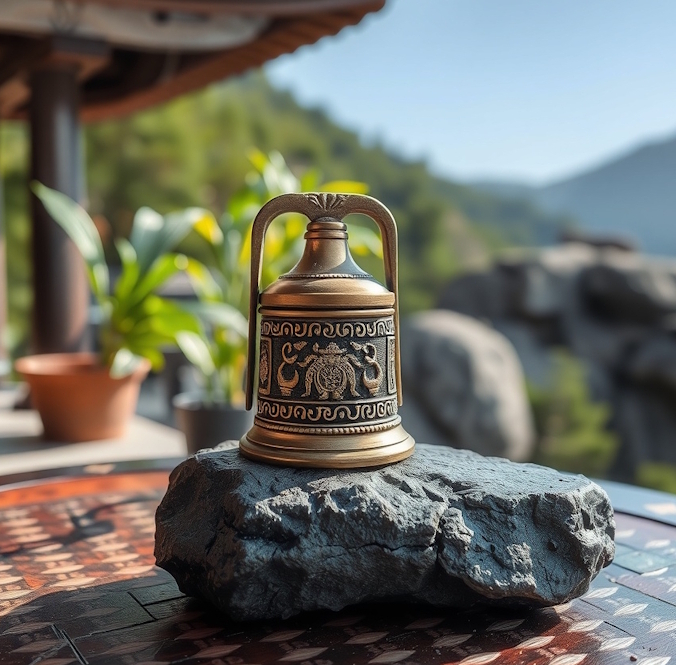
A bell is less about calling in something external and more about gaining your attention. It marks a moment of change: before and after, scattered and present, open and complete.
Simple ritual ideas
- Ring a bell once before meditation, journalling, or creative work.
- Ring it again when you finish, to mark completion.
- Ring, take one breath and come back to calm: Use it when your emotions feel overwhelming
If you don’t have a bell, a timer chime or a gently tapped piece of metal can do the same job.
The Stone: Grounding And Commitment
Symbolic meaning: stability, endurance, grounding, simplicity.
Stones are helpful when what you need isn’t inspiration but steadiness. Their quietness is part of the lesson.
Simple ritual ideas
- Pocket stone: Carry a small stone when you need grounding. Each time you touch it, relax your jaw and lower your shoulders.
- Commitment stone: Place a stone on your desk to represent one small, realistic promise you’re keeping to yourself.
- Release stone: Hold a stone while naming what you’re ready to let go of, then place it outside or on a windowsill as a benign act of closure.
Reflective prompts
- What does “staying calm” mean for me right now in one simple step?
- What should I focus on when my mind starts racing with worries?
- What commitment can I stick to, even when my week gets chaotic?
A Simple 5-Minute Everyday Object Ritual
If you want to try this in a simple, low-pressure way, start here. The goal isn’t perfection, but presence.
Choose one object (mirror, bowl, thread/cloth, bell, or stone).
- Arrive (30 seconds): Hold or look at the object. Breathe slowly. Let your shoulders relax.
- Name the meaning (one sentence): For example, “This bowl represents receiving support,” or “This stone represents steadiness.”
- Set one clear intention (one sentence): Keep it practical. “Today I move at a gentler pace,” or “I will finish one important task without rushing.”
- Make one small action (one minute):
- Ring the bell once.
- Tie one knot.
- Place the intention in the bowl.
- Touch the stone and breathe.
- Meet your gaze in the mirror for three breaths.
- Close (30 seconds): Whisper “thank you,” or simply nod – completion is important.
If you want a little more structure, a simple printable object meaning card can help. Write down the object, its meaning, and one intention on a single card, then reuse it whenever you need an anchor. A dedicated journal page works just as well.
Making The Ordinary Feel Intentional
Everyday objects are already part of your life. When you give them a purpose, they become quiet companions rather than just things you pass by.
The deeper practice isn’t collecting tools. It’s learning how to meet your own life with more attention. A mirror can teach honesty, a bowl receiving. Thread can teach patience, a bell transition, and a stone steadiness.
Choose one object this week and let it hold one simple meaning. Over time, that small act of care can become its own kind of sacred.