*This post may contain affiliate links for which I earn commissions.*
When your mind feels busy, mindfulness can start to sound like one more thing you’re supposed to do properly. Sit still, clear your thoughts, be calm.
Meanwhile, your brain is writing emails, replaying something awkward from yesterday, and trying to work out dinner.
That’s where this comes in.
A symbol scavenger walk gives your mind something quieter to do other than “switch off.” It gives it a job: notice.
Pick a couple of simple things to watch for while you walk, maybe round shapes, doorways curves, things that mirror each other, or anything that catches your eye. Let what’s around you guide what you think about. You don’t have to clear your head completely. There’s no right or wrong way to be aware of things.
You’re simply taking a walk and looking at your surroundings a little more carefully than usual.
And that small shift can bring you back surprisingly fast.
This guide shows you how to create a short walking routine that makes you more aware of your surroundings. You’ll also discover simple methods to write down your observations, with drawing ideas if you want them. This activity combines awareness creativity, and fits easily into your regular schedule.
Why Symbols Work So Well For Presence
When your mind is full, it helps to have something specific to notice.
That’s where symbols come in.
A symbol is simply a shape or pattern your mind recognises quickly, and that quick moment of recognition can interrupt autopilot in a very useful way.
On a scavenger walk, symbols quietly do three things at once:
- They focus attention. Instead of vaguely scanning everything around you, you’re looking for something specific.
- They slow perception down. When you’re searching for a circle or a reflection, you naturally linger a little longer.
- They connect outer and inner experience. Something you notice outside can mirror something you need inside—steadiness, transition, clarity.
This is also where manifestation-style practices can become more grounded.
You’re not trying to make yourself think happy thoughts, you’re just picking a topic & watching for it in the world around you. The more you spot it the simpler it gets to remember. Nothing magical here. Your brain just works this way naturally.
The important part is staying relaxed about it. Don’t try to figure out what everything means or treat your walk like a riddle to solve. Just pay attention, and if something feels meaningful, let it come to you on its own.
Four Motifs To Look For And What They Offer
If you’re not sure where to begin, start here.
Choose one to four motifs for your walk. But if you’re new to this, one or two is usually enough. Too many can start to feel like homework.
Here are four that tend to work especially well.
Circles: Continuity And Return
Once you start looking for circles, you’ll see them everywhere. Manhole covers, tree rings, wheels, cups, stones, knots in wood, even birds looping overhead.
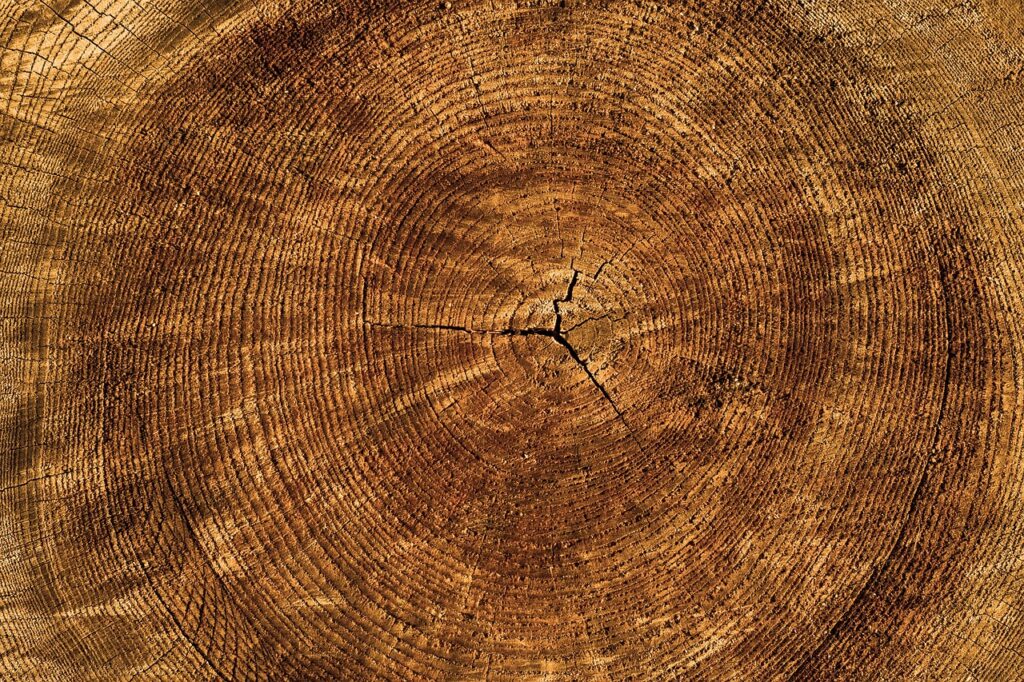
Mindfulness angle: A circle has no sharp edge. Your attention can rest on it without needing to move on quickly. It’s a visual reminder that you can return to the present as many times as you need to.
Reflective prompts:
- Where in my day do I need a “return” instead of a push?
- What feels complete, even if it’s not perfect?
- What keeps repeating – does it support me or drain me?
Quick sketch idea: Draw a simple circle and fill it with small marks that reflect what you noticed, e.g. dots for sounds, lines for movement, shading for mood.
Thresholds: Transition And Choice

Thresholds are the points where one space becomes another. Doorways, gates, bridges, kerbs, crossings, tunnels, even the shift between sun and shade.
Mindfulness angle: Thresholds make you notice moments you’d usually rush through. They bring attention to the in-between.
Reflective prompts:
- What am I leaving behind today?
- What am I stepping into, even in a small way?
- Where would it help to pause before moving on?
Tiny ritual (optional): As you cross a threshold, relax your shoulders and take one steady breath. Nothing formal, just a small pause.
Spirals: Growth, Unfolding, And Patience
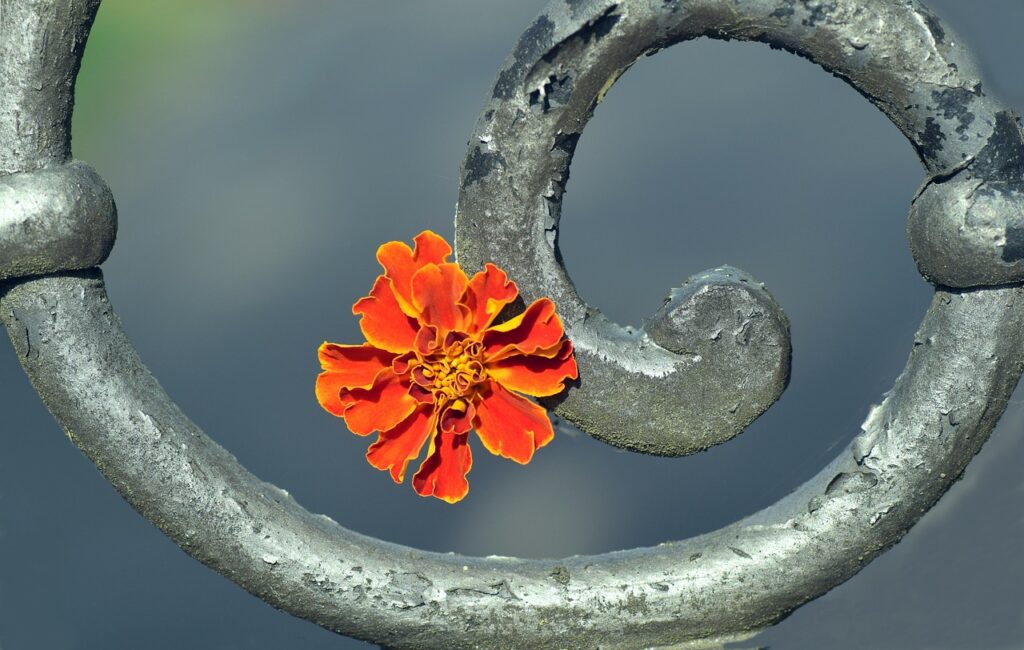
Spirals are a bit rarer, which makes them more satisfying to find. Ferns, snail shells, coiled ropes, swirled ironwork, winding paths, even the swirl in a cup of coffee.
Mindfulness angle: Spirals suggest movement that isn’t straight or fast. They’re especially grounding when you feel behind or stuck.
Reflective prompts:
- What is unfolding slowly, even if I can’t see the full picture yet?
- Where might repetition actually be part of learning?
- What would steady, realistic growth look like this week?
Quick sketch idea: Draw the spiral you found, then add one word along each curve moving outward—from how you feel now to what comes next (calm → clarity → next step).
Reflections: Awareness And Honest Seeing
Reflections show up in windows, puddles, mirrors, shiny cars, ponds, railings, even your phone screen in sunlight. Once you start looking, they’re hard to miss.
Mindfulness angle: Reflections make you aware of how you’re seeing, not just what you’re seeing. They remind you that you’re part of the moment too.

Reflective prompts:
- What am I seeing clearly right now?
- What might I be projecting onto this moment?
- What would it feel like to be a little more honest, and a little more kind?
Note for nervous systems: If reflections make you feel self-conscious, skip them that day. Choose something that feels easier. This should feel supportive, not uncomfortable.
How To Set Up Your Walk Without Overthinking It
The best version of this practice is the one you’ll actually do.
So keep it simple.
1) Choose your container
- Time: 10–25 minutes is enough.
- Route: Familiar is completely fine. In fact, noticing symbols on a familiar street can feel surprisingly different.
2) Pick your motifs
Start with one or two. More than that can turn it into a checklist. A simple starting point is circles + thresholds.
3) Decide how you’ll record
You don’t need to do anything fancy.
- A few notes: three short lines in a notebook.
- A photo log: one photo per motif.
- A symbol map: rough doodles showing where you found things.
- A single sentence: “Today I noticed ___, and it made me feel ___.”
If you like physical tools, a small notebook and a pen you enjoy using can help make the ritual feel easier to return to. Something pocket-sized, simple, and easy to use while standing or walking works best.
4) Set one gentle intention
Not a goal—just a theme.
- “Notice what is already here.”
- “Practise returning.”
- “Look for quiet transitions.”
That’s enough.
Then start walking.
Practical Application: The 12-Minute Symbol Scavenger
If you want something you can try today, this is the easiest place to begin.
Step 1: Start With A Reset (1 minute)
Before you walk, pause.
Stand still for a moment. Feel your feet on the ground. Let your gaze soften.
Take three slow breaths and notice:
- one sound
- one colour
- one sensation (temperature, breeze, fabric on skin)
That’s your reset.
Step 2: Walk And Collect (8 minutes)
Choose two motifs (or use these):
- Circle
- Threshold
As you walk, collect three examples of each.
For each one, pause briefly and note:
- what it is (a drain cover, a doorway, a puddle)
- one quality it suggests (steady, open, shifting, clear)
- one feeling in your body (lighter, tense, curious, calm)
No need to overthink it, first impressions are enough.
Step 3: Record (2 minutes)
Write six quick lines:
- Circle 1:
- Circle 2:
- Circle 3:
- Threshold 1:
- Threshold 2:
- Threshold 3:
Keep it quick. Even a couple of words per line is enough.
Step 4: Close With A Quiet Takeaway (1 minute)
Before you head back into your day, finish with this:
- “The world reminded me of ___.”
Then take one breath and move on.
If you like a little structure, this is a great place for a printable. Something with a few boxes for motifs, notes, and a small sketch area makes the practice easy to repeat—and gives you something to look back on later.
Presence You Can Carry Home
This isn’t about finding perfect meaning.
It’s about giving your attention somewhere kind to land.
- Circles bring you back.
- Thresholds highlight change.
- Spirals remind you that growth isn’t always linear.
- Reflections invite you to see more clearly.
And over time, something subtle happens.
You start noticing these patterns even when you’re not trying.
It’s not mystical, it’s just what happens when your attention gets used to looking.
Things feel a little more vivid, and you feel a little more present.
And sometimes, that is exactly what you needed.
You don’t need a special place or perfect conditions to be present. You just need something small to notice, and permission to let that be enough.