*This post may contain affiliate links for which I earn commissions.*
There are those days when the world feels slightly out of focus, not stressful enough to collapse under but enough to blur the edges of our attention. The kind of day where there just isn’t enough time to get everything done, and yet we instinctively feel the need for longer periods of calm. That half hour of meditation that we never ger around to, or a creative session postponed for “when things are less hectic.” But ‘presence’ doesn’t only manifest in those rare longer sessions – it can often be found in brief, deliberate pauses too.
Just two minutes can be enough to calm the inner turmoil of your day. With the right anchor, even the smallest pause becomes a chance to steady the breath, ease the mind, and reconnect with a quieter rhythm beating beneath the noise of everyday life. One of the quickest and easiest ways to access that moment is through simple visual prompts – small marks, shapes, colours, or symbols that open a momentary doorway to self-awareness.
Below is a collection of easy-to-follow practices that I or others have found useful, based around imagery and intuitive mark-making. It’s not about making art but rather about focusing through the movement of the hand and the subtle language of symbols. Whether you’re between tasks, caught in a restless afternoon, or seeking a touchstone before sleep, these small rituals can help you return to yourself with gentle ease.
Why Visual Anchors Settle the Mind
Most of us spend our days surrounded by words, our lives filled with messages, plans and conversations that constantly evolve but never. Visual imagery works differently, bringing forth an alternative way of thinking and feeling that words cannot replicate. Images do not argue with us or make demands, they simply exist in front of us as something clear and open, urging our internal chatter to quieten. Our brains find something easy and direct to focus on instead of spinning through a cacophony of thoughts, creating a sense of space inside our minds. Visual thinking gives our word-based mind a break, offering a place to rest that feels immediate and uncomplicated.
Symbolic shapes have been used for centuries in contemplative rituals and traditions: spirals in ancient carvings, mandalas in spiritual art, arches in sacred architecture. These forms appear repeatedly, communicating intuitionally through lines and shapes that calm our minds and restore a sense of wholeness.
Creating a quick sketch can interrupt negative mind loops and provide a moment for clearer, more positive thoughts to emerge. If you like keeping tools nearby, consider keeping a small set of pencils and a miniature sketchbook available, or even a handful of printable visual prompts, to help make these pauses easily accessible. Many people find it useful to keep a reflection journal close by where they can write down a single sentence before continuing with their day. If that appeals to you, a compact journal or a simple prompt deck can become a beautifully practical companion.
Ten Two-Minute Practices for Everyday Awareness
These practices are designed to be flexible – something you can draw, imagine, or reinterpret depending on the moment. View them as invitations rather than expectations.
1. The Slow Spiral
Draw a small spiral that widens gradually. Let your breath lengthen, inhaling and exhaling slowly as the line expands.
Reflection: Where might I soften my pace today?
2. One Unbroken Line
Place your pen on the page and draw a single continuous line – it can be straight, curved, or wandering. Notice the tempo of your hand.
This line becomes a quiet portrait of the present moment.
3. The Colour You Need
Choose a colour intuitively, without overthinking. Fill a tiny square with it.
Ask: What emotional temperature does this colour reveal?
(Tip: I find a small watercolour tin or pencil set works beautifully here.)
4. Constellations from Nothing
Dot three to five points on a page and link them casually.
Observe the pattern without naming it too quickly. Let meaning drift in gently.
5. A Threshold Shape
Sketch a doorway or arch. Consider it as a symbol of movement or transition.
Whisper inwardly: What am I stepping toward?
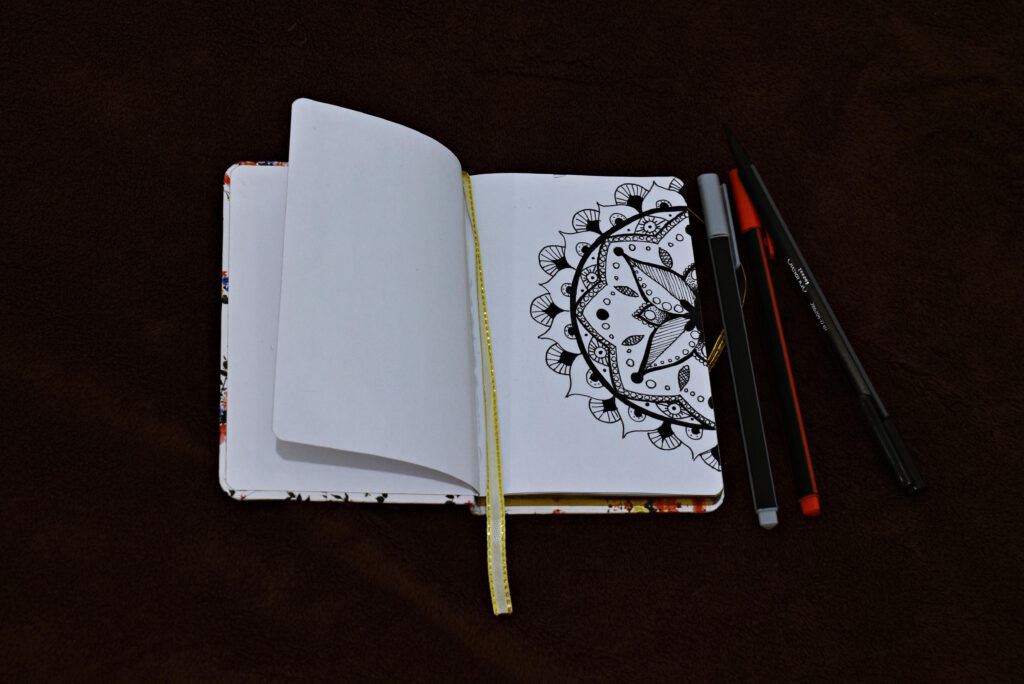
Draw a small circle and add simple repeating shapes inside. Even a few symmetrical marks can bring an instant sense of stability.
6. Miniature Mandala
Draw a small circle and add simple repeating shapes inside.
Even a few symmetrical marks can bring an instant sense of stability.
7. Horizon Line
Draw a horizontal line across the page. Add one small shape above or below it (a dot, hill, cloud etc).
Feel the spaciousness it naturally invites.
8. A Symbol of Support
What kind of support feels beneficial right now?
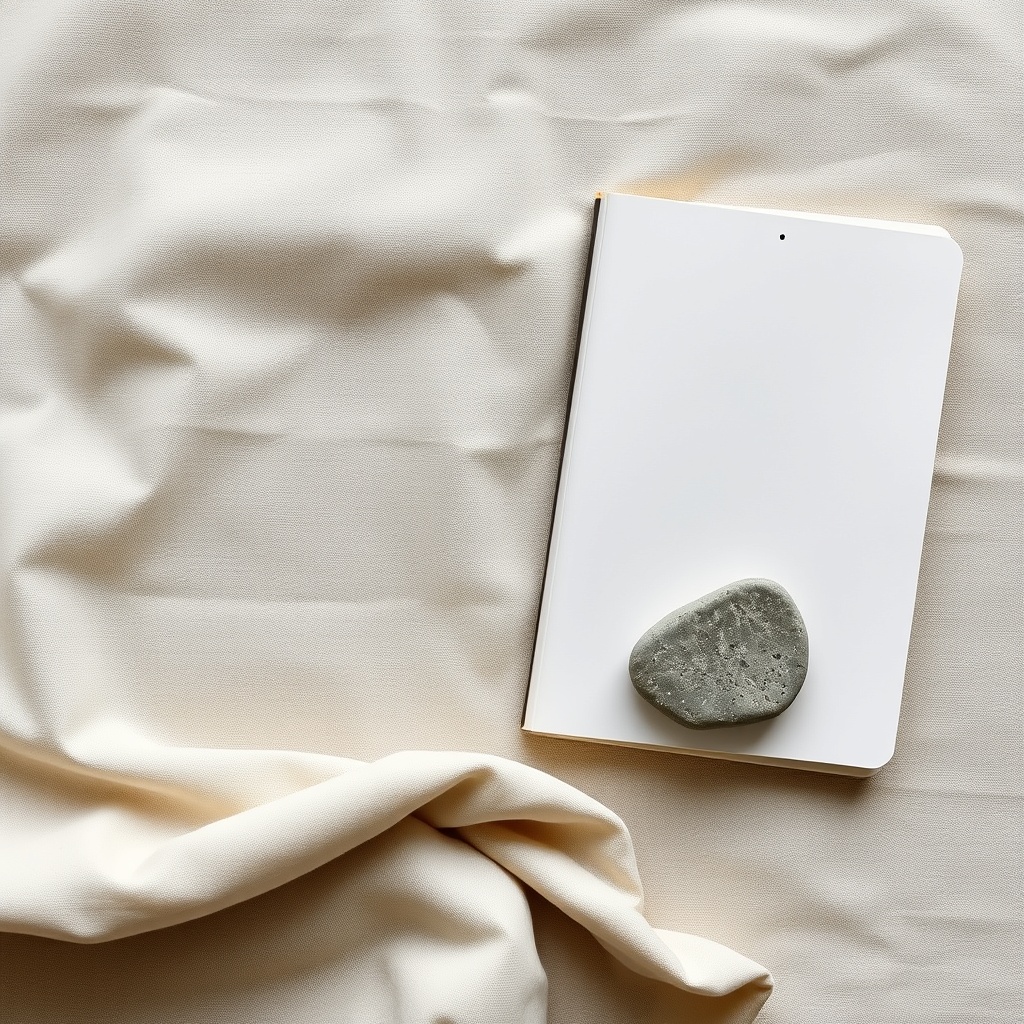
Choose an object that feels grounding to you e.g. a stone, leaf, candle flame, or perhaps a personal sigil, and sketch it lightly.
Ask: What kind of support feels beneficial right now?
9. Pattern Meditation
Fill a small corner of the page with repeating marks: waves, triangles, or lines.
Stop before it becomes effortful. Rhythm, rather than perfection, is the point.
10. Free-Motion Release
Set a short timer and let your hand move without direction.
Afterward, notice one mark or cluster that catches your attention. Let that observation be enough.
Integrating These Moments into Daily Life
Two-minute creative pauses work best when they feel like part of your natural environment rather than an interruption. A notebook left open on the table becomes an invitation, a saved image on your phone becomes a portable anchor, even a spare envelope can become a canvas if the moment calls for one.
A few guiding principles help these practices settle into everyday rhythm:
- Keep materials visible. When tools are tucked away, pauses happen less often. A small sketchbook within reach is its own kind of reminder.
- Welcome digital options when needed. Sketching apps or AI-generated prompt images can provide an unexpected sense of stability and focus when you’re away from your desk.
- Let repetition hold you. Returning to familiar prompts builds a private ritual, deepening the sense of ease each time.
- Stay open to shifting symbolism. A spiral that once felt expansive may later feel steadying. A horizon might become a metaphor for rest instead of possibility. Allow meanings to flow with you.
A Simple Creative Exercise: The Two-Minute Symbol Scan
For moments when you need a clear, intentional pause, this exercise offers a simple framework.
- Choose a simple symbol – a circle, star, leaf, or spiral.
- Set a two-minute timer.
- Spend the first minute sketching or observing the symbol slowly.
- Spend the second minute writing a single sentence about how the symbol mirrors your inner landscape today.
Because it has a clear beginning and end, this practice is especially useful when you feel scattered. It gives the mind just enough structure to unwind.
If you prefer a bit more structure, a mindfulness journal or a small creative prompt deck can provide ready-made cues for the days when the mind feels too occupied to choose something from scratch.
Conclusion
Mindful creative breaks remind us that being fully present in the moment is not something we have to earn through long, silent hours. It can be found inside mindful, creative moments such as a few marks on a sketch pad, a horizontal line drawn on a bit of paper, or a colour chosen without thinking. When we treat visual prompts as momentary doorways into awareness, creativity becomes less about crafting something beautiful and more about returning to ourselves. These small gestures can help uncover the rhythm beneath the noise, reconnecting us to the present moment and allowing us to fully appreciate the beauty and depth of our experiences.